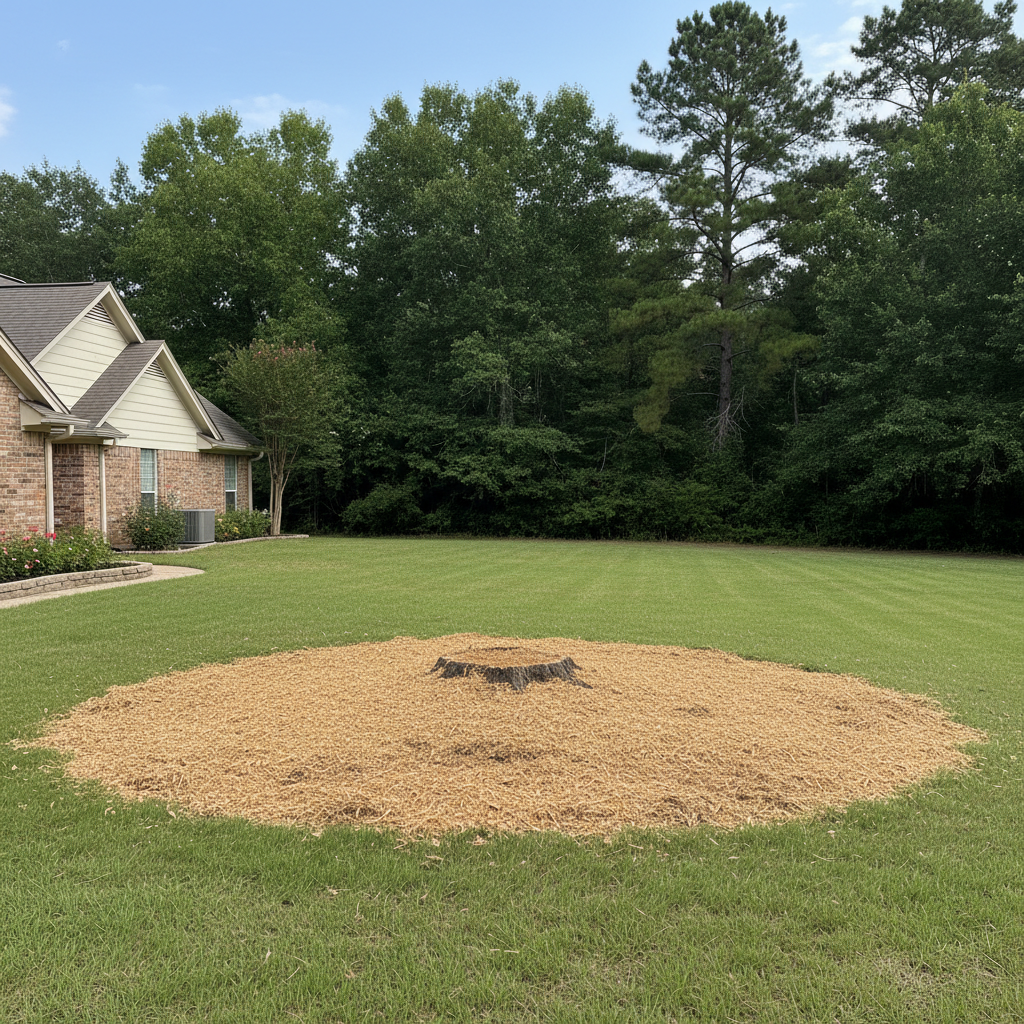
So, you've had a tree stump ground down. Fantastic! You've really taken a big step toward getting your yard back, getting rid of that tripping hazard or just that ugly spot. But the job isn't totally done just because the grinder packed up and left. What you do next, and what you keep an eye on, really changes how long that area stays clear and healthy. Here in Porter, with our specific soil and humidity, you've got a few extra things to think about.
What Happens After the Grind?
When we grind a stump, we're basically turning that big chunk of wood into a pile of wood chips and dirt. We usually go down about 6 to 12 inches below the ground level, sometimes even more, depending on the root structure and what you plan to do with that spot. This creates a hole, which we then fill with those chips. It's not just a messy pile; those chips are organic material that will break down over time. And that, my friend, is the key to understanding your next steps.
Making the Work (and Your Yard) Last
You want that spot to be useful, right? Maybe you're planting grass, putting in a flower bed, or just want a nice, level surface. Here's how you make sure the work holds up:
Deal with the Chips: You'll end up with a mound of chips and soil. You can leave some to decompose, sure, but too many will create a raised, spongy area. I generally tell folks to remove a good chunk of them. Use them as mulch in other parts of your yard, or bag them up for yard waste pickup. If you leave too many, they'll decompose unevenly, and you'll get annoying sinkholes later.
Backfill Properly: Once you've gotten rid of the extra chips, you need to fill the hole with good quality topsoil. Don't cheap out here. Our sandy loam in Porter can be fine, but adding some nutrient-rich topsoil really helps with settling and future growth. Fill it a little "proud," meaning slightly mounded, because it will settle down.
Compact and Water: After backfilling, gently compact the soil. You don't need a fancy machine; just walk over it or tamp it down with your foot. Then, water the area really well. This helps the soil settle naturally and pushes out any air pockets. Do this a few times over the next week or two. You'll see it sink, and you might need to add more soil.
Planting or Seeding: If you're putting down sod or grass seed, do it pretty soon after backfilling. The new grass roots will help stabilize the soil and prevent erosion, especially with those heavy rains we sometimes get in the spring and fall.
Regular Maintenance: What to Keep an Eye On
Even after you've done the initial backfill, you're not totally off the hook. This isn't high-maintenance stuff, but a little attention really goes a long way:
Monitor for Settling: This is the big one. As those remaining wood chips break down, the soil will keep settling. You might see a slight dip form over the next few months, or even a year or two. Just add more topsoil as needed to keep it level. It's just how nature works.
Watch for Sprouts: Sometimes, especially with certain tree species common around here, like Sweetgum or Elm, you might get new sprouts trying to pop up from any leftover root fragments. We call these suckers. Just snip them off at ground level as soon as you spot them. You've got to be persistent; eventually, the root system will run out of energy and die.
Check for Fungi: As the wood chips decompose, you might occasionally see mushrooms or other fungi appear. This usually means healthy decomposition is happening and isn't typically a problem for your new lawn or plants. Just kick them over if you don't like how they look. They're actually helping the process along.
Warning Signs of Problems
Most of the time, stump grind sites are pretty straightforward. But a few things might tell you something's not quite right:
Excessive Sinking: If an area sinks dramatically and quickly — way more than just normal settling — it could mean a big empty space underneath wasn't filled correctly, or there's a lot of wood still breaking down really fast. This isn't common if we ground deep enough, but it can happen.
Persistent, Vigorous Sprouts: A few suckers are normal, yes. But if you're constantly fighting a dense thicket of new growth, it might mean the stump wasn't ground deep enough, or that a very large, active root got left behind. This is more than just annoying; it means the tree is trying to come back.
Unusual Odors or Pest Activity: While rare, if you notice a really foul smell or a sudden increase in termites or other wood-boring insects right in the grind area, it could mean there's a larger, decaying wood mass attracting them. That's definitely a red flag, wouldn't you say?
When to Call a Professional
Look, most of this stuff you can handle yourself. Adding a bag of topsoil or snipping a sprout isn't exactly rocket science. But sometimes, it's just better to pick up the phone and get someone with experience:
If you're seeing those persistent, vigorous sprouts: Especially if you've been cutting them back for months and they just keep coming. That means the root system is still alive and kicking, and you might need a deeper grind or a targeted treatment.
If you have major, ongoing settling issues: You've added soil multiple times, and it just keeps sinking. This suggests a bigger underlying problem with decomposition or an unfilled void. We can figure out what's going on and recommend a solution.
If you're planning a major construction project over the area: Thinking of putting in a patio, a shed, or even a foundation for an addition? You absolutely need that area stable and free of decomposing wood. We can make sure it's prepped correctly for heavy loads.
If you're seeing signs of pests like termites: Don't mess around with those. If you suspect a pest problem coming from the old stump site, call us or a pest control expert right away. You definitely don't want them moving into your house.
At Charis Tree Solutions, we don't just grind the stump and disappear. We want you to have a clear, usable yard that stays that way. If you're ever unsure about what's happening with an old stump site, or if you've got a new one that needs grinding, give us a call. We're always happy to take a look and give you honest advice.